
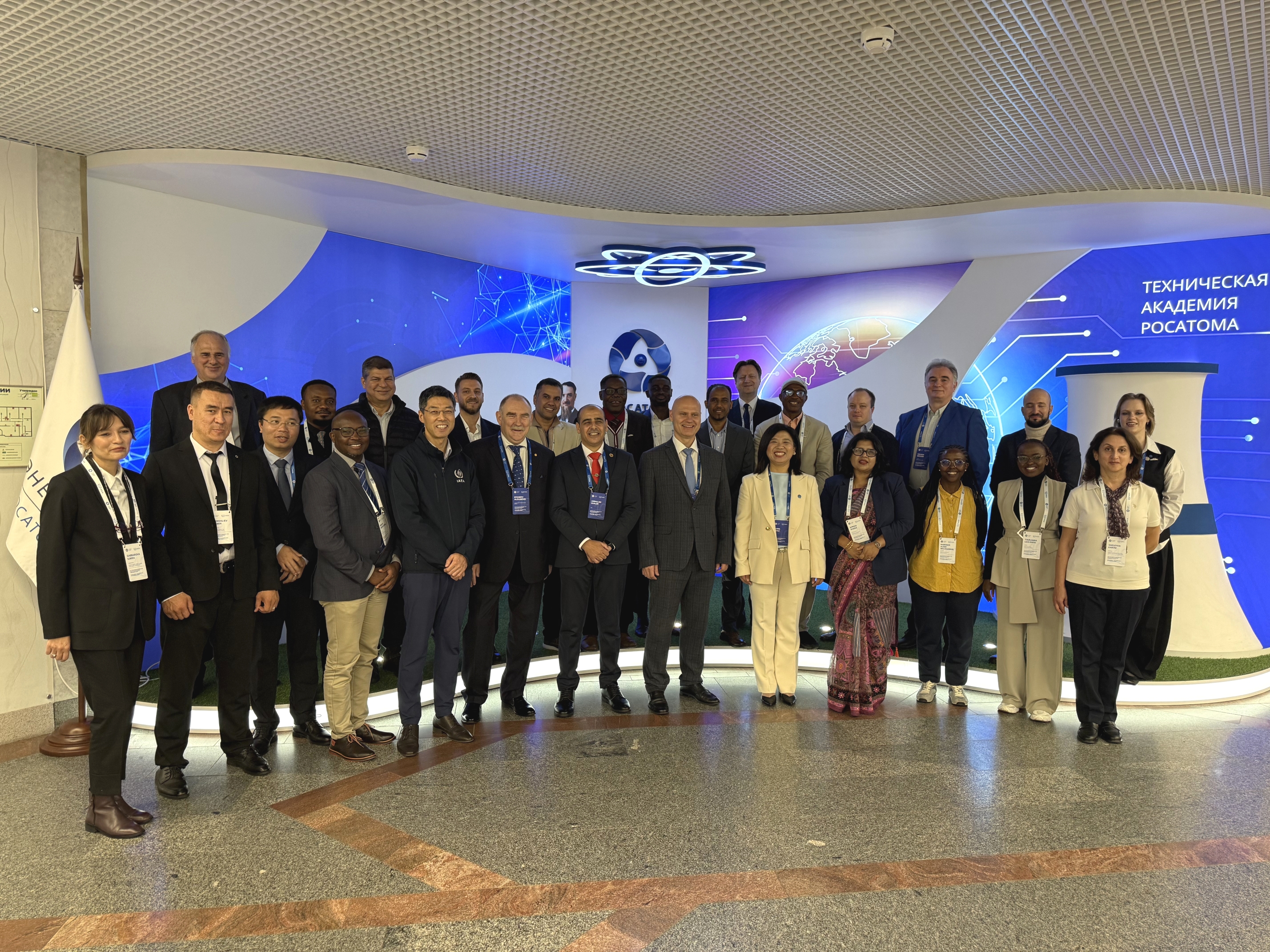
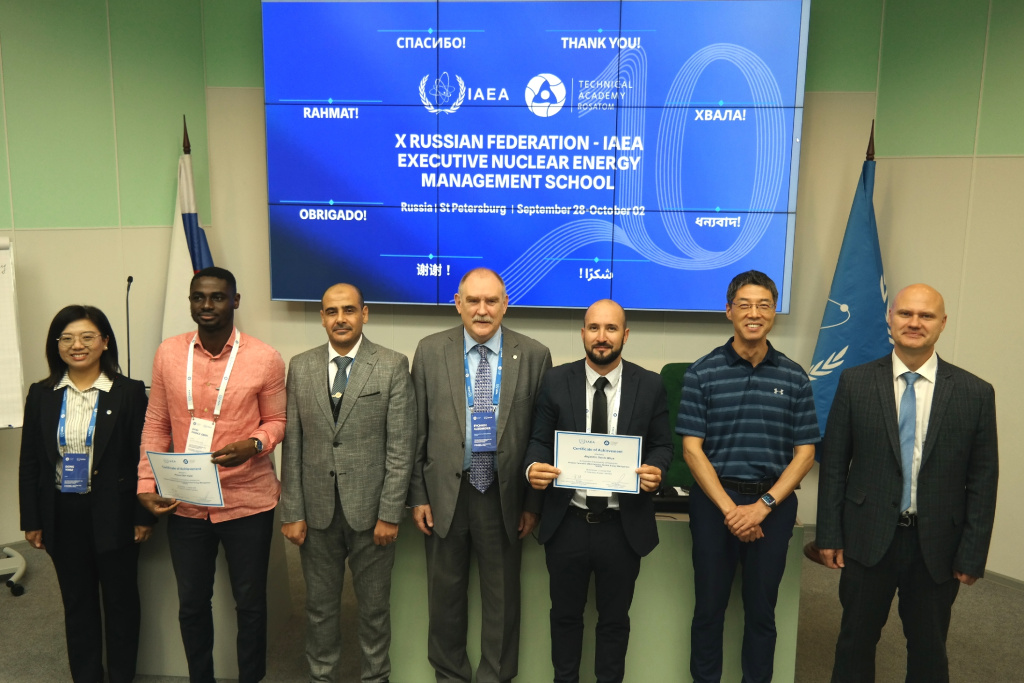
The tenth anniversary joint Russian Federation and International Atomic Energy Agency (IAEA) Nuclear Energy Management School for Leaders has concluded in St Petersburg. Over the past decade, the project has become one of the most established platforms for cooperation between the IAEA and the State Atomic Energy Corporation Rosatom in developing nuclear infrastructure in countries that are launching or already operating national nuclear power programmes.
This year, the School brought together 19 managers and specialists from 13 countries: Armenia, Bangladesh, Brazil, Cuba, Egypt, Ethiopia, Ghana, Jordan, Kenya, Nigeria, Serbia, Uzbekistan and Russia. Representatives of relevant ministries, national nuclear commissions and agencies, regulatory authorities, research organisations and nuclear facilities travelled to St Petersburg to take part in the event. The participants included heads and deputy heads of national nuclear organisations, a representative of the Ministry of Science and Technology of Bangladesh, the Acting Assistant to the Minister of Mining and Energy of Serbia, as well as heads of divisions of regulatory authorities and organisations responsible for developing nuclear power programmes in their countries.
“Over the past ten years, the School has become an example of close and continuously developing cooperation between the IAEA and Rosatom Technical Academy. Every year, we work together with the IAEA to ensure that the programme is as practical and relevant as possible. We engage experts from nuclear power plants, engineering companies, research institutes, universities and other Rosatom organisations. This enables participants to learn not only from theory, but also from real projects and practical experience,” said Viktor Mazepov, Director for International Cooperation at Rosatom Technical Academy.
The official opening ceremony was also attended by Wei Huang, Director of the Division of Nuclear Energy Planning and Economics, Department of Nuclear Energy, IAEA, and Alexander Shutikov, Director General of JSC Rosenergoatom.
For five days, the managers worked with experts from the IAEA and the Russian nuclear industry who have first-hand experience in strategic planning, the implementation of major nuclear projects, nuclear and radiation safety, and the economics and financing of nuclear energy. The experts included Alexander Bychkov, former IAEA Deputy Director General and Head of the Department of Nuclear Energy; Fumin Jiang, Director of the IAEA Division of Nuclear and Physical Security Coordination; experts from the IAEA Department of Nuclear Energy; and representatives of Rosatom, JSC ASE, engineering companies and other nuclear industry organisations.
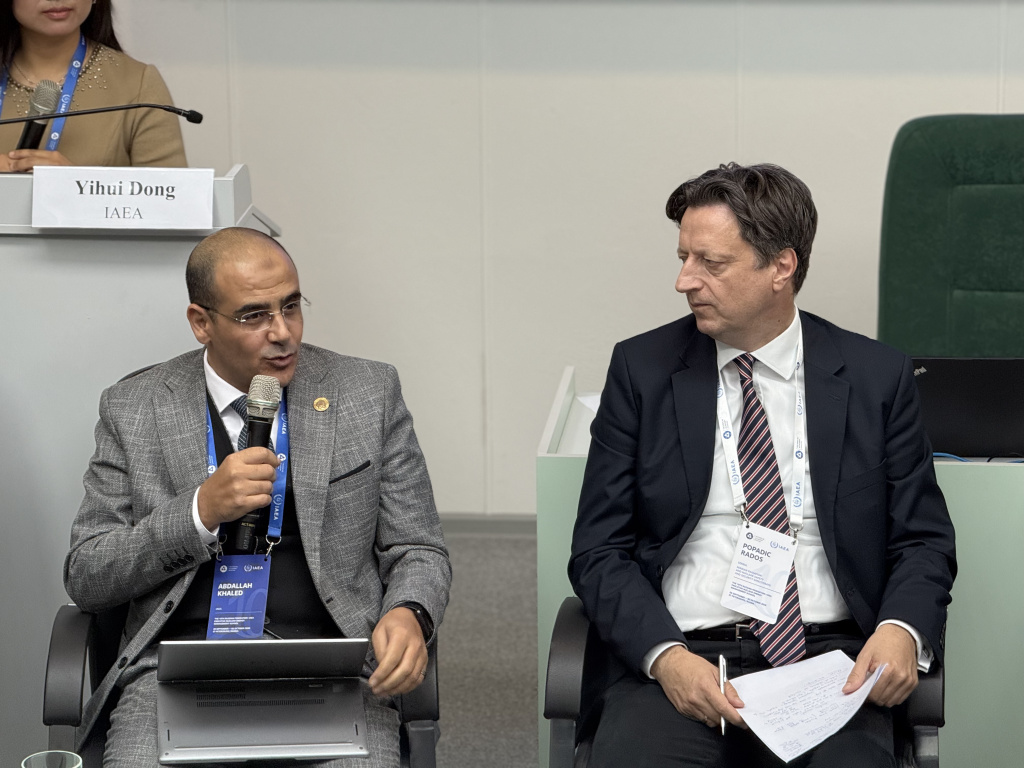
The School programme covered key aspects of nuclear energy management, including strategic planning, economics and financing, safety, nuclear infrastructure, new reactor technologies and the application of artificial intelligence. Panel discussions on the future of nuclear energy formed a separate part of the programme. Experts and participants discussed small modular reactors, the development of national nuclear power programmes and the experience of their respective countries.
“The panel session was an excellent opportunity to share Serbia’s experience and the steps our country has taken so far in developing its nuclear energy programme, while also exchanging views with IAEA experts and senior representatives from other countries. I particularly valued the open discussion on both the opportunities and the challenges facing countries that are considering or developing a nuclear power programme. The School met and exceeded my expectations, both in terms of the quality of the programme and its excellent organisation. It offered a valuable combination of expert knowledge, practical insights and international exchange, making it a highly rewarding experience” said Radoš Popadić, Acting Assistant Minister of Mining and Energy of Serbia, sharing his impressions of the School.
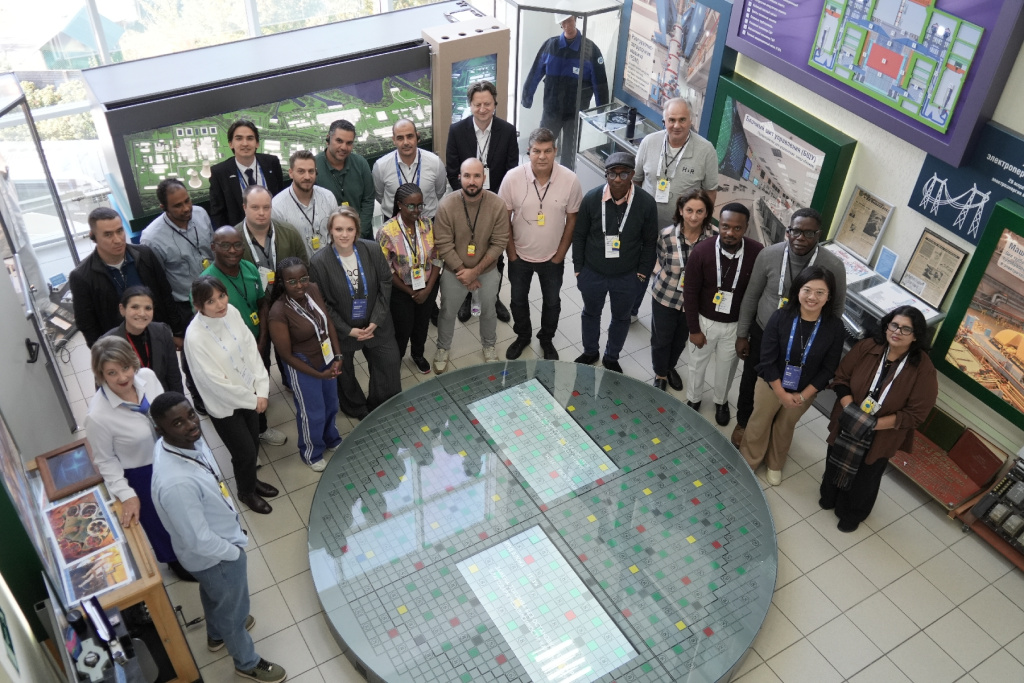
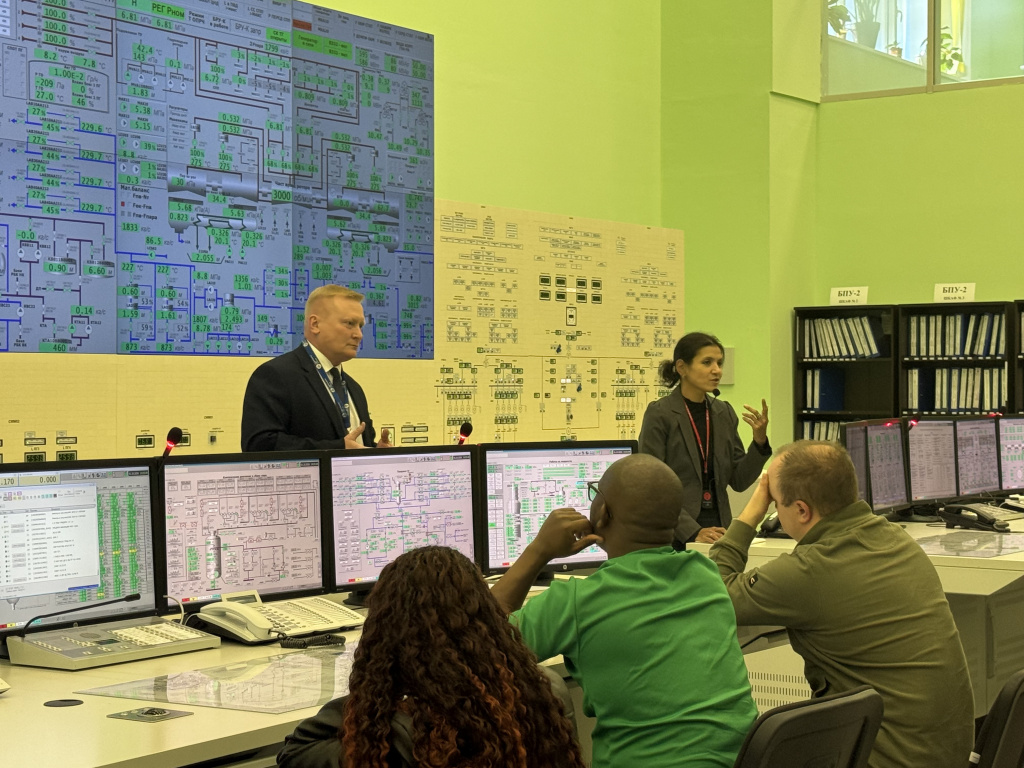
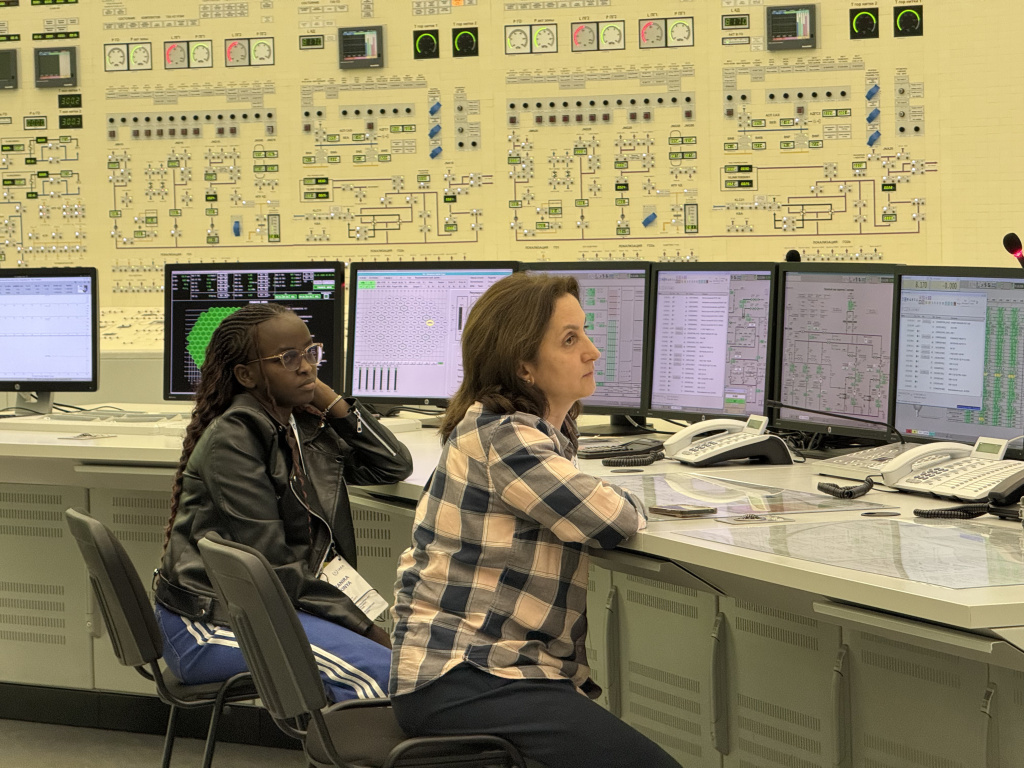
The practical part of the School included a technical tour of the Leningrad Nuclear Power Plant, a branch of JSC Rosenergoatom Concern, the electricity division of Rosatom. The participants visited the plant’s training unit and museum and exhibition complex. They gained insight into the practical experience of operating modern power units, the organisation of personnel training and the plant’s public information and educational activities.
“Leningrad NPP is one of the largest nuclear power plants in Russia, and we are proud to share our experience with colleagues from different countries. Personnel training is fundamental to safe and reliable operations. I am confident that cooperation with the IAEA and participation in programmes of this kind help us grow and strengthen the common safety culture of the global nuclear industry,” said Vladimir Pereguda, Director of Leningrad NPP.
“I am proud to have served as the Scientific Secretary for this 10th anniversary edition. After months of preparation and coordination, it was truly rewarding to see everything come together and to witness such engaging exchanges among participants and experts. Many thanks to our Rosatom colleagues for their excellent cooperation and support throughout this journey” said Yihui Dong, IAEA Scientific Secretary, sharing her impressions of the School.
For reference
Rosatom Technical Academy is an international multidisciplinary centre for personnel training in the nuclear industry. Since 2019, the organisation has been an IAEA Collaborating Centre. In October 2024, the Technical Academy extended its agreement with the IAEA and became the first and only centre to cooperate with the Agency in five programme areas. Over the years of cooperation, more than 80 international events have been held, attended by more than 2,100 participants from countries around the world.
Leningrad NPP is one of Russia’s largest nuclear power plants in terms of installed capacity, with a total capacity of 4,400 MW. It is the only Russian nuclear power plant operating two types of reactors. The plant currently has two RBMK-1000 power units — graphite-moderated, channel-type nuclear reactors using thermal neutrons, each with an electrical capacity of 1,000 MW — and two Generation III+ VVER-1200 power units, pressurised water reactors with an electrical capacity of 1,200 MW each. Power Units 1 and 2, equipped with RBMK-1000 reactors, have been shut down for decommissioning after 45 years of operation. They were replaced by two VVER-1200 units, which were commissioned in 2018 and 2021. Their design service life is 60 years, with the possibility of extending it by a further 20 years. Construction of Power Units 7 and 8, equipped with VVER-1200 reactors, began in 2022. They will replace Power Units 3 and 4, which are equipped with RBMK-1000 reactors. Once commissioned for commercial operation, each new unit is expected to generate more than 8.5 billion kWh of electricity annually. This will ensure a reliable supply of electricity and heat to residents of Russia’s Northwestern Federal District and support the implementation of major regional investment projects. The new phase of the plant is also expected to provide employment for almost 2,000 people.
Rosatom’s electricity division is the largest producer of low-carbon electricity in Russia. Its management company, JSC Rosenergoatom Concern, operates 10 nuclear power plants, including the world’s only floating nuclear heat and power plant. Thirty-four power units with a total capacity of approximately 29.8 GW generate around 19% of Russia’s electricity.The division’s enterprises provide a full range of services for the commissioning, maintenance, servicing and personnel training of nuclear power units. They also produce isotopes for medicine, agriculture and microelectronics. New areas of activity are actively developing within the division, including electric vehicle charging infrastructure, biogas plants and the production of industrial robots.
Russia is actively developing cooperation with all interested countries. Major international projects continue to be implemented, with Rosatom and its divisions playing an active role in this work.
The panel session was an excellent opportunity to share Serbia’s experience and the steps our country has taken so far in developing its nuclear energy programme, while also exchanging views with IAEA experts and senior representatives from other countries. I particularly valued the open discussion on both the opportunities and the challenges facing countries that are considering or developing a nuclear power programme. The School met and exceeded my expectations, both in terms of the quality of the programme and its excellent organisation. It offered a valuable combination of expert knowledge, practical insights and international exchange, making it a highly rewarding experience.