
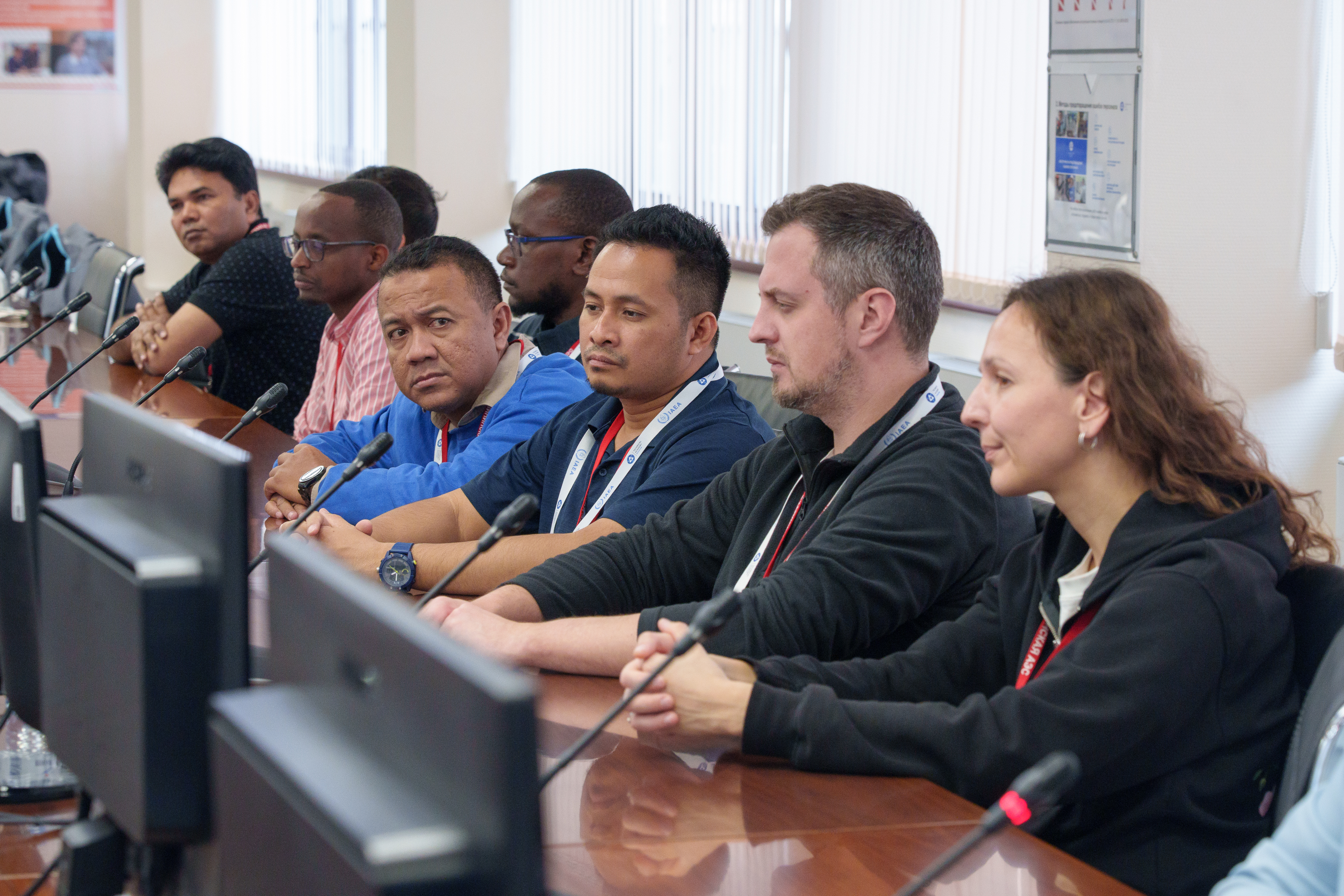
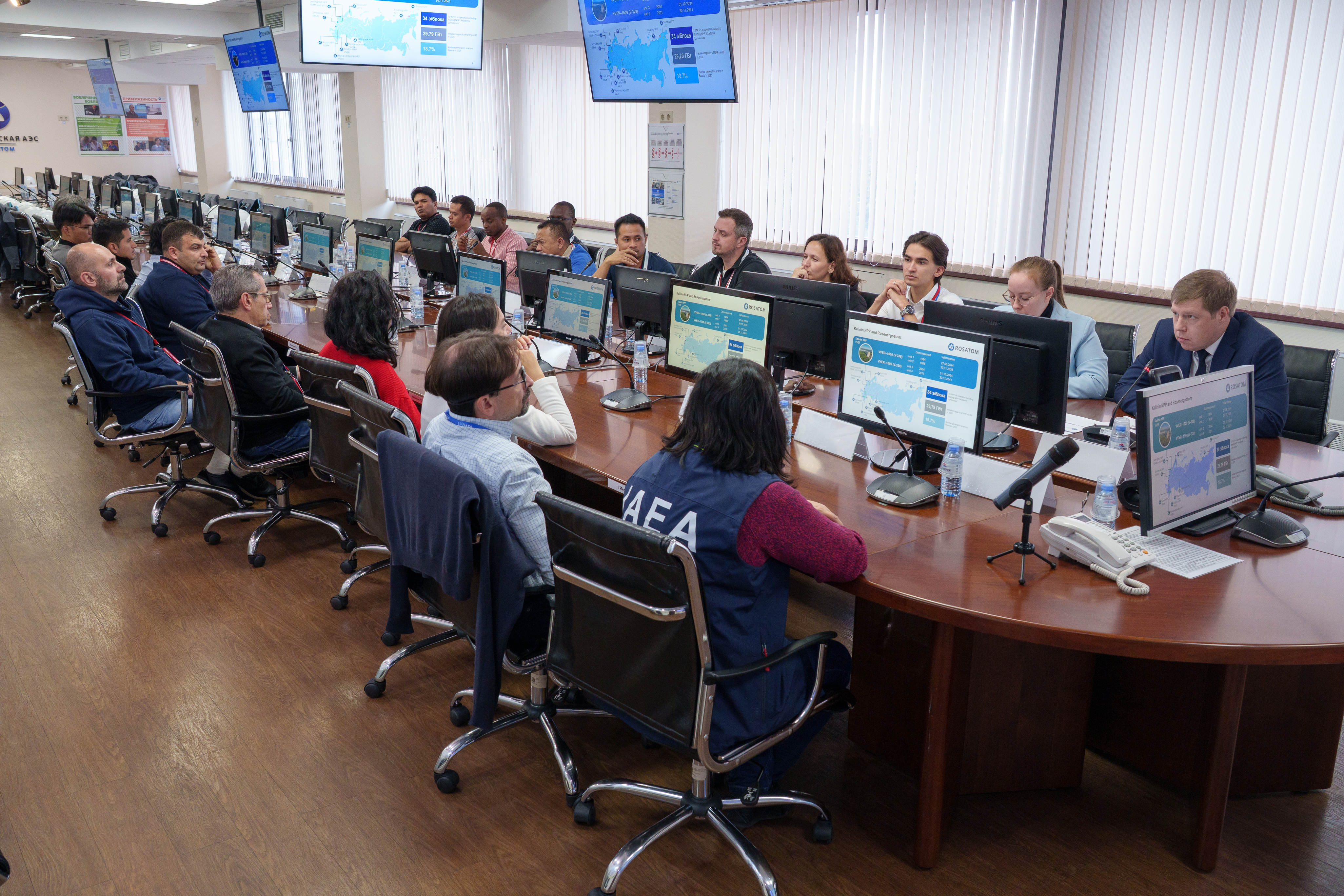
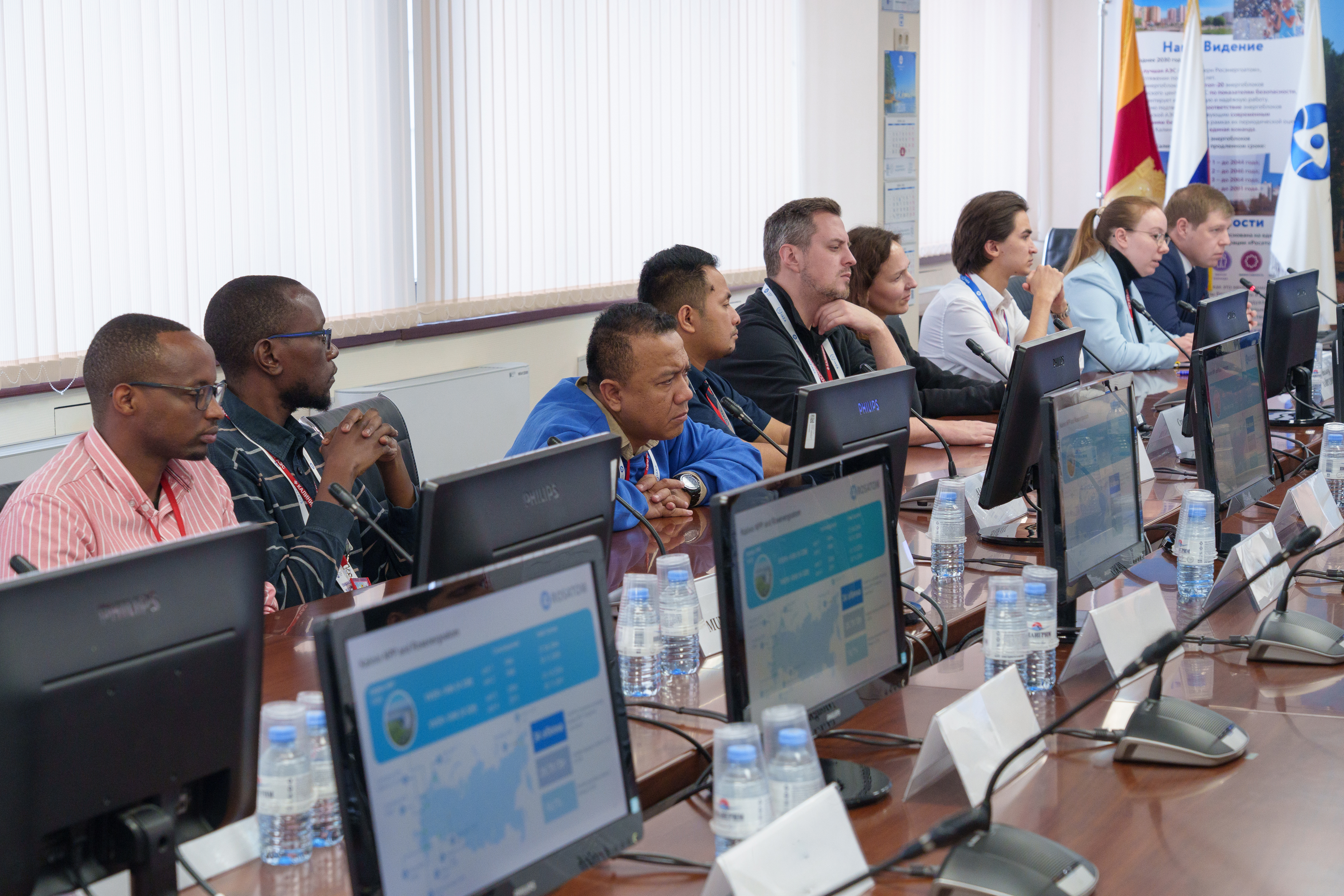
From 26 to 30 October, an IAEA interregional training course on geotechnical aspects, seismic hazards and volcanic hazards in site evaluation was held in Moscow and brought together 16 specialists from 12 countries. The event marked the first in a series of training courses organized by Rosatom Technical Academy and the IAEA in 2026 under the Agency’s SEED (Site and External Events Design). The programme aims to assist IAEA Member States in enhancing the safety of nuclear installations by evaluating site characteristics and external hazards in accordance with international safety standards. The first course focused on large reactors, while training will continue in St. Petersburg in November, with a focus on small modular reactors.
«Training specialists in site evaluation for nuclear installations requires not only knowledge of international standards but also an understanding of how to apply them to specific engineering challenges. As an IAEA Collaborating Centre, Rosatom Technical Academy places particular emphasis on developing international expertise in nuclear safety. It is important to us that participants not only study international standards but also learn to apply them in practice by examining real engineering challenges and gaining insight into Russian experience», said Viktor Mazepov, Director for International Cooperation at Rosatom Technical Academy.
The course combined lectures delivered by international and Russian experts with practical sessions examining international experience in assessing natural hazards relevant to the siting of nuclear installations. In particular, participants reviewed case studies on the assessment of possible volcanic hazards at nuclear power plant sites, including the potential consequences of volcanic ashfall, pyroclastic flows and other hazardous phenomena. Special attention was paid to methods for identifying potential hazards, assessing their likelihood and taking the results of these studies into account when making design decisions.
As part of the practical programme, participants visited Kalinin Nuclear Power Plant to learn about Russian approaches to ensuring the safe and reliable operation of nuclear power units. Evgeny Solovyov, Deputy Chief Engineer for Safety and Reliability, briefed the participants on the plant’s development, its operational activities and its role in supplying electricity to central Russia. Particular focus was placed on the plant’s approach to ensuring nuclear safety, personnel training, and environmental monitoring.
«The visit to Kalinin NPP offered a valuable first-handed insight into modern Russian technologies. Such visits play an important role in professional knowledge exchange and provide valuable opportunities to learn from proven practices in NPP operation, particularly in maintaining resilience against risks, including those arising from external hazards», said Levon Hovhannisyan, Head of the Nuclear Safety Department of the Armenian Nuclear Regulatory Authority.
«Our ultimate goal is nuclear safety. Achieving this requires a comprehensive approach that integrates hazard assessment, the engineering features of nuclear installations, and the operator’s administrative measures. In recent years, increasing emphasis has been placed on building resilience against low-probability, high-consequence events to ensure nuclear safety under design extension conditions and beyond-design-basis scenarios. Thanks to ROSATOM’s cooperation and the efforts of IAEA Experts, this course provided participants with a valuable opportunity to see how these principles are applied in practice», said Kazuyuki Nagasawa, SEED Mission Leader from the IAEA in his closing remarks.
For reference:
SEED is a bundled peer review service designed to assist the IAEA’s Member States in the different stages of life of nuclear installations (power plants, research reactors, advanced reactors, etc.) based on IAEA Safety Standards and Guidelines. The SEED modules address the following phases of the development of a nuclear project: site selection, site safety assessment, design of structures, systems and components, plant safety assessment, and operation, taking into consideration site-specific external (both natural and human-induced) and internal hazards (fire, flooding, impacts, etc.).
Rosatom Technical Academy is an international multidisciplinary training centre for personnel in the nuclear industry. Since 2019, the organization has served as an IAEA Collaborating Centre. In October 2024, the Academy renewed its agreement with the IAEA, becoming the first and only centre to cooperate with the Agency across five programme areas. Over the years, more than 80 international events have been held, involving over 2,100 participants from various countries. Russia actively develops cooperation with all interested countries and continues to implement major international projects. Rosatom and its divisions play an active role in these efforts.
Kalinin Nuclear Power Plant is a branch of JSC Rosenergoatom Concern. The plant is located in the Udomlya Municipal District in the north of Tver Region. It comprises four power units equipped with water-cooled, water-moderated power reactors (VVER-1000), each with an installed capacity of 1,000 MW.
Russia is actively developing cooperation with all interested countries. Major international projects continue to be implemented, with Rosatom and its divisions playing an active role in this work.