
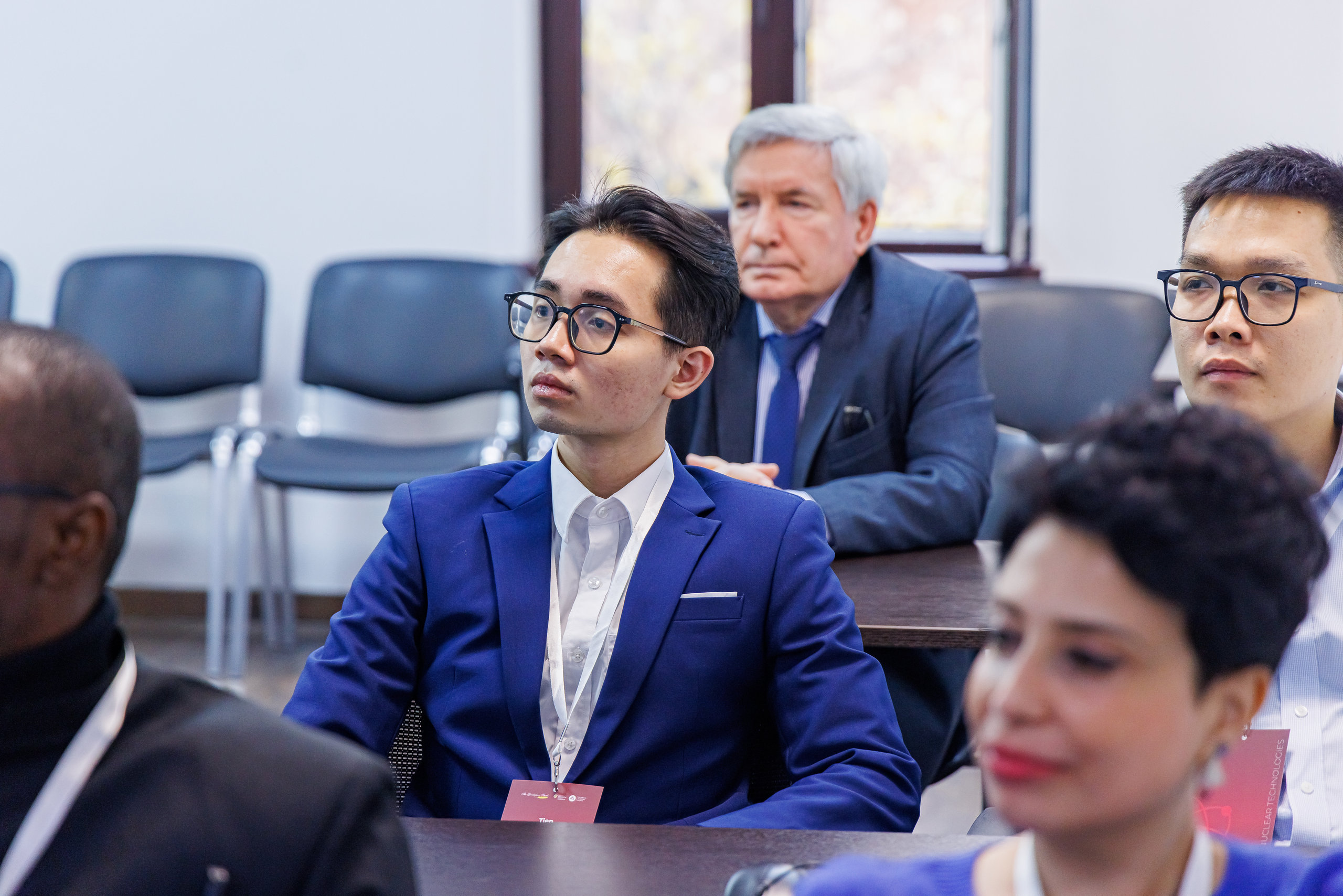
the InteRussia fellowship in Nuclear Technologies started at Rosatom Technical Academy. Over four weeks, participants — specialists and university lecturers from 13 countries: Nepal, Brazil, India, Vietnam, Indonesia, Rwanda, Ethiopia, Egypt, Nigeria, Mongolia, Bolivia, Bangladesh and Ghana — will learn about Russian experience in nuclear energy and study modern nuclear technologies in the Train-the-Trainers format.
Within the fellowship, participants will complete training in four thematic modules: energy system planning for embarking countries, nuclear power plants with small modular reactors and two-component nuclear energy system, high-power nuclear power plants, and applications of nuclear technologies in agriculture and medicine. The training will take place at three Rosatom Technical Academy sites: in Moscow, St. Petersburg and Obninsk. In addition to Academy experts, lectures for the foreign specialists will be delivered by teachers and experts from leading Russian institutes and Rosatom core universities — the Energy Research Institute of the Russian Academy of Sciences, UrFU and OINPE NRNU MEPhI. A valuable experience for the participants will be visits to key enterprises and facilities of the Russian nuclear industry — JSC MSZ, JSC ZiO-Podolsk, Leningrad NPP-2 and the Obninsk NPP, museum of the first in the world NPP, as well as one of the leading nuclear medicine centers of the Russian Ministry of Health — the A. Tsyb Medical Radiological Research Center. Based on the knowledge and experience gained, participants will be able to modify relevant educational programs at their universities and thus contribute to developing human resource capacity in the implementation of national nuclear energy programs and nuclear technology application programs.
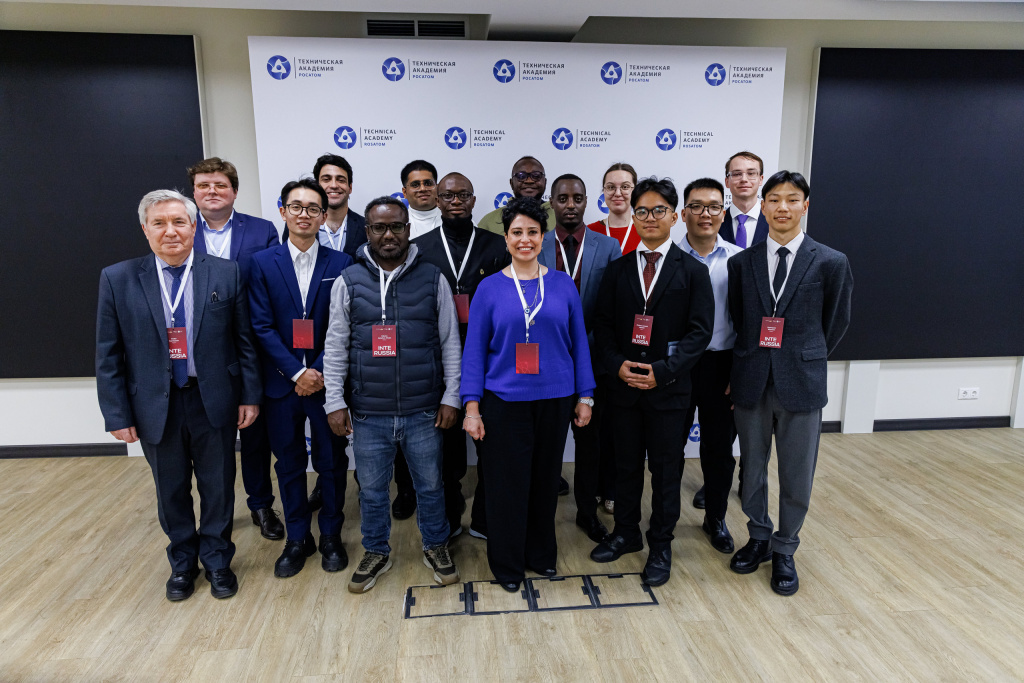
On the first day of the fellowship program, Viktor Mazepov, Director for International Cooperation of Rosatom Technical Academy, delivered welcoming remarks to the fellowship participants and spoke about the Academy’s areas of work and what awaits the participants during the next month in Russia. “The exchange of knowledge and experience is a key element in the development of the nuclear industry. We all share responsibility for the safe use of nuclear technologies. That is why it is so important to share accumulated experience and support countries that are developing their own nuclear programs,” he emphasized, speaking about the importance of international exchange of professional knowledge.
Sergey Orlov, Program coordinator of the Autonomous Non-Profit Organization "Mezhdunarodniki", noted that one of the fellowship’s key objectives is to help participants establish professional connections that will continue long after the programme comes to an end: “In the current challenging international climate, it is particularly important to develop professional networks that enable specialists from different countries to work together, regardless of decisions made at the highest political level. We hope this fellowship will give you an opportunity to build professional relationships that will benefit your future careers”.
For reference:
The InteRussia Fellowship in Nuclear Technologies is organised by Autonomous Non-Profit Organization "Mezhdunarodniki" with grant support from the Presidential Grants Foundation. Rosatom Technical Academy is the main partner representing the State Atomic Energy Corporation Rosatom within the fellowship.
The Train-the-Trainers courses are regularly conducted by the Rosatom Technical Academy within the framework of the Rosatom State Corporation project "International Cooperation in the field of nuclear education". They cover a wide range of topics: from electricity production at large and small nuclear power plants to irradiation of medical and agricultural products, production of modern radiopharmaceuticals at research reactors, development of advanced systems and devices for cancer diagnosis and treatment. The courses contribute to the transfer of competencies in teaching students nuclear and radiation technologies to the Rosatom partner countries.