
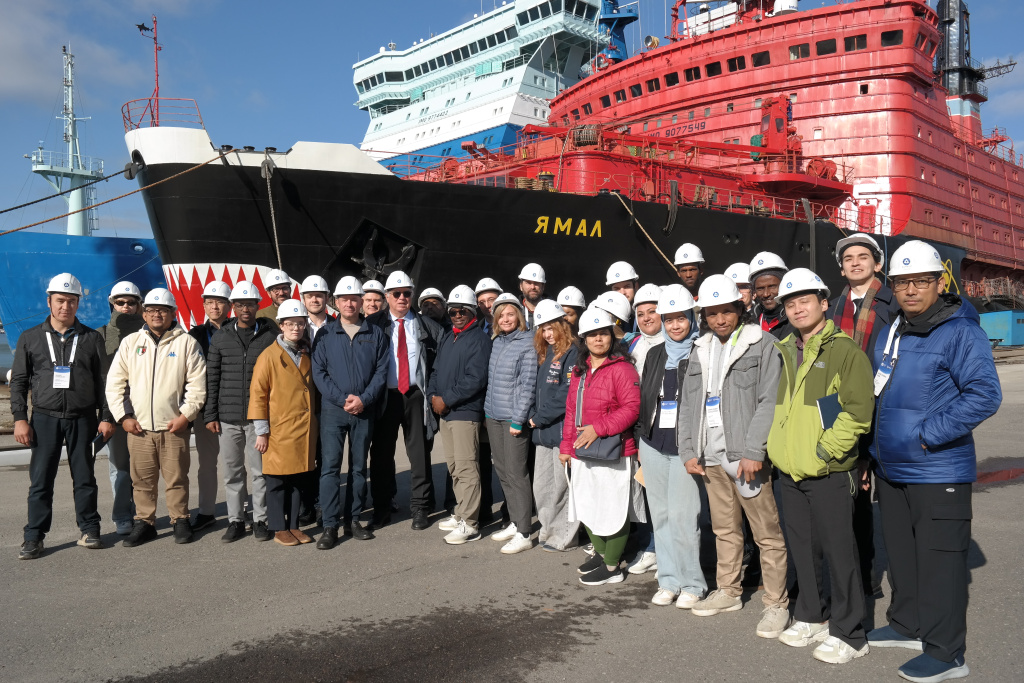
From the world’s first nuclear-powered icebreaker to an operating floating nuclear power plant and advanced reactor technologies, the sixth IAEA School on Small Modular Reactors has concluded in Murmansk. Held in Russia for the first time, the School brought together 22 participants from 13 countries. The event continued the long-standing cooperation between the Rosatom Technical Academy, an IAEA Collaborating Centre, and the International Atomic Energy Agency. The choice of Murmansk as the venue was not accidental. The School became the northernmost event of its kind ever organized by the IAEA. On 23 August 2019, exactly seven years ago, the floating power unit Akademik Lomonosov departed from Murmansk for its future operating location in Pevek. Today, it has been supplying electricity and heat to one of Russia’s most remote regions for six years. Murmansk is also home to the world’s only nuclear-powered icebreaker fleet. This gave participants an opportunity to discuss small modular reactor technologies in a location where nuclear energy has been operating under real Arctic conditions for decades.
A distinctive feature of the Russian programme was that participants learned about SMRs not only from researchers and technology developers. The School brought together virtually the entire range of professionals directly involved in the development and operation of such facilities: reactor designers, the operating organization, the nuclear regulator, technology suppliers and specialists in personnel training. A total of 11 Russian experts contributed to the School. As a result, discussions of SMRs quickly moved beyond projects and concepts to practical operating experience.
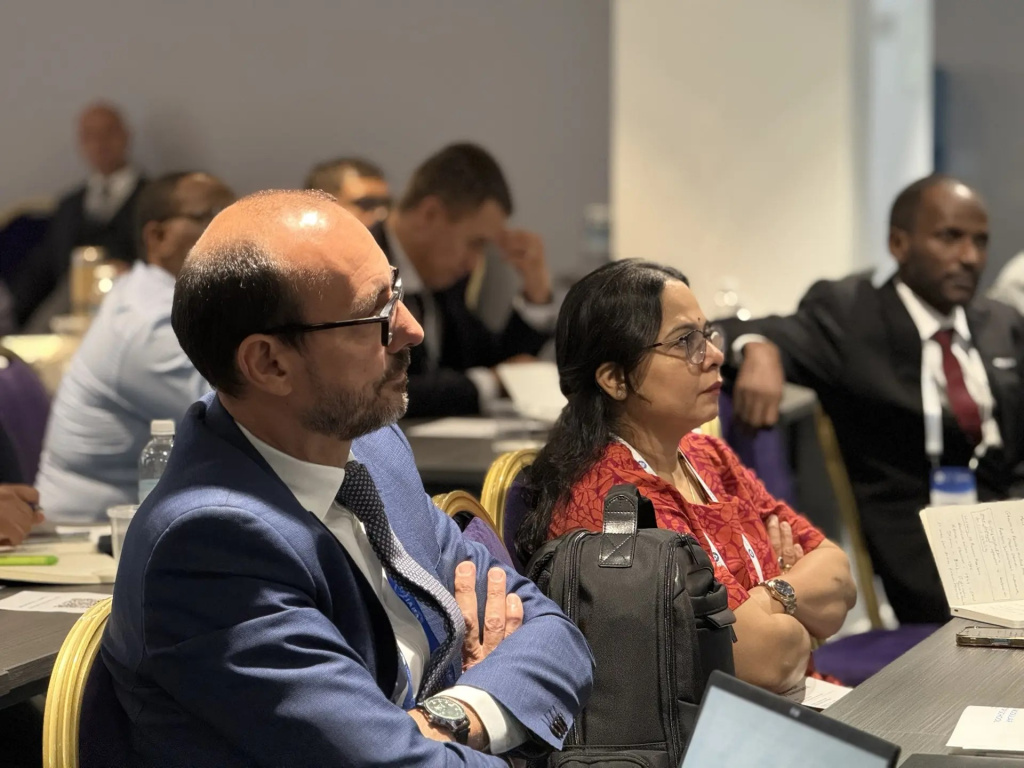
Denis Volgushev, Deputy Chief Engineer of the Akademik Lomonosov Floating Nuclear Power Plant (FNPP), shared his practical experience of operating the facility, covering technical and operational solutions as well as human factors. Participants also took part in a virtual technical tour of the floating nuclear power plant.
«The Akademik Lomonosov has been in commercial operation for six years. It has been refuelled. It delivers electricity and heat every day, in one of the harshest environments on Earth. That is operating experience, and operating experience is the most valuable commodity in our field», - said Mikhail Chudakov, IAEA Deputy Director General and Head of the Nuclear Energy Department.
A dedicated part of the School focused on one of the key prerequisites for the large-scale deployment of new reactor technologies: the people who will operate them. Anton Dyachenko, Director of the Advanced Nuclear Power Technologies Centre at the Rosatom Technical Academy, presented the Russian approach to workforce development for small modular reactors, covering the Academy’s experience in training the first cohort of personnel for the FNPP as well as its educational support for the BREST-OD-300 project.
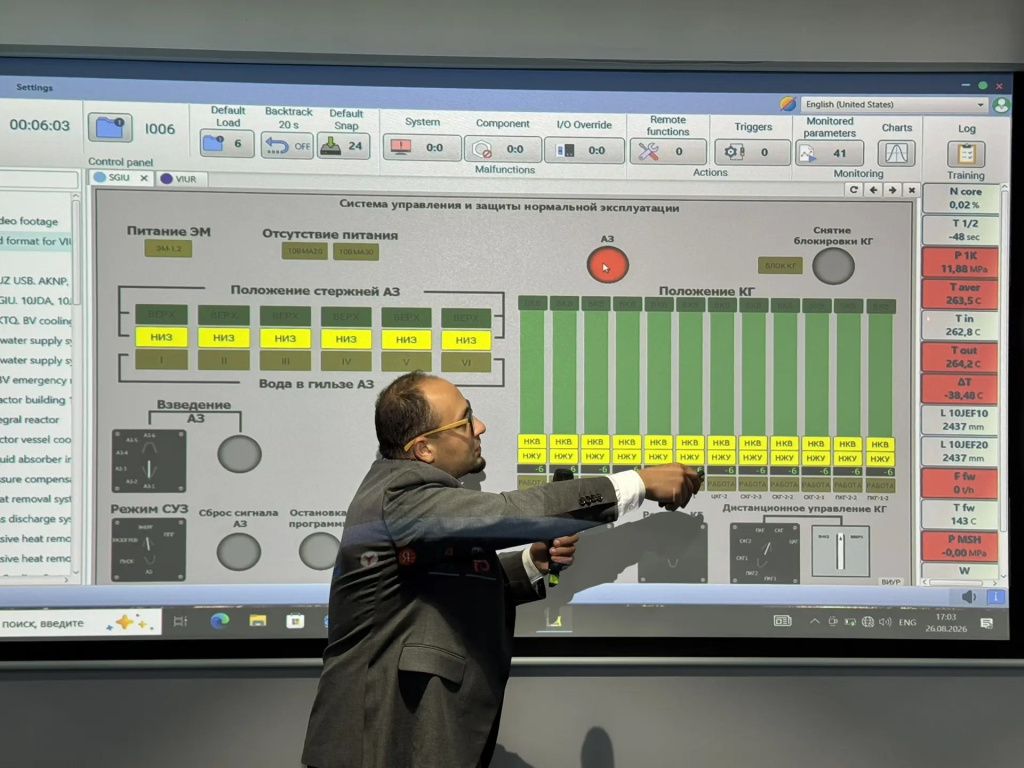
As part of the programme, participants were also given the first demonstration of a basic-principles simulator designed for training personnel for small modular nuclear power plants equipped with RITM-200N reactors. The simulator enables future specialists to study the processes taking place within the plant and practise basic control skills before working at an actual facility.
The Arctic component of the programme offered participants an opportunity to see the evolution of Russia’s marine nuclear technologies firsthand. On Thursday, participants went aboard the world’s first nuclear-powered icebreaker Lenin, which entered service in 1959 and now operates as a museum. The following day, they visited the operational Project 22220 nuclear-powered icebreaker Sibir.
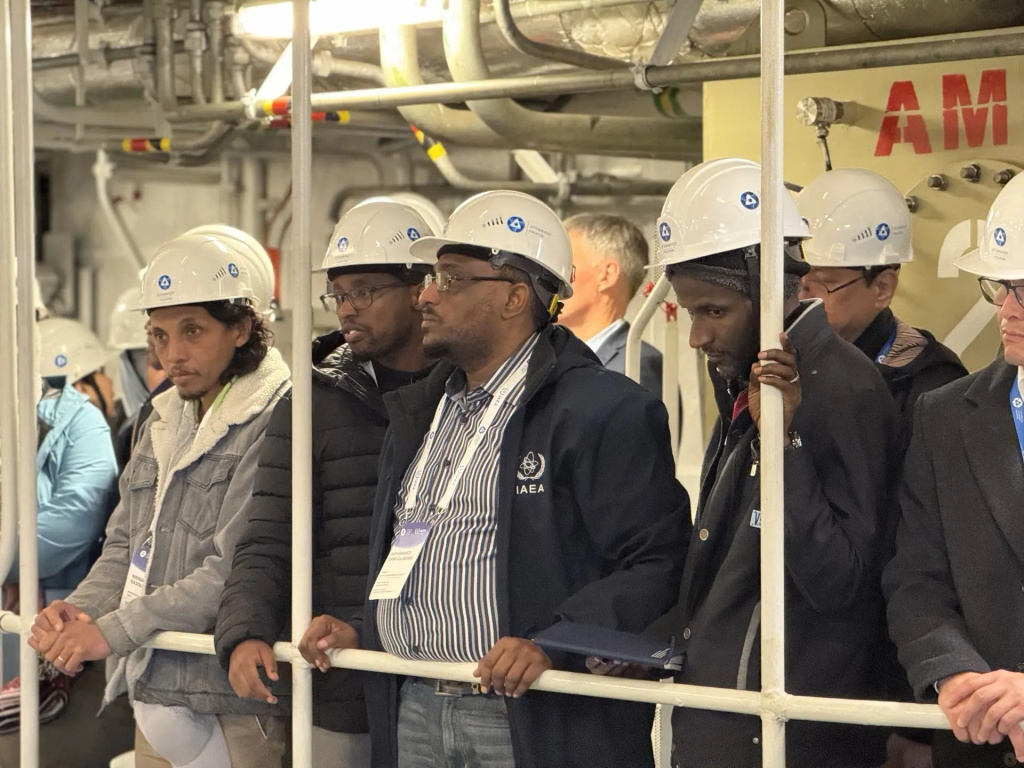
«These days, we are discussing the future of nuclear energy while standing literally inside its history. Today we are on board the world’s first nuclear-powered icebreaker Lenin, and tomorrow the participants will see an operating new-generation icebreaker. Over several decades, nuclear technologies at sea have come a long way. It is particularly symbolic to discuss this experience now, as the IAEA is developing the ATLAS initiative dedicated to the use of nuclear technologies at sea», - said Viktor Mazepov, Director for International Cooperation at Rosatom Technical Academy.
The final day of the School took place not in a museum setting, but at an operating enterprise. At the Atomflot site, participants learned about the work of the Maritime Operations Headquarters Situation Centre and discussed the operation of the nuclear-powered icebreaker fleet with Atomflot’s management. They then went aboard the Project 22220 nuclear-powered icebreaker Sibir, visiting the bridge, the main control room and the engine room.
«For decades, Atomflot has demonstrated that nuclear energy, even in the harsh Arctic environment, means safety, reliability and efficiency. At present, the nuclear-powered icebreaker fleet consists of eight vessels. In addition, we are building three more Project 22220 universal nuclear-powered icebreakers, as well as Rossiya, the world’s most powerful nuclear-powered icebreaker of Project 10510 Lider. We are pleased to see that the work of Atomflot is receiving such high praise from talented and dedicated professionals from different countries and international organizations», - said Yakov Antonov, Director General of Atomflot, during the visit.
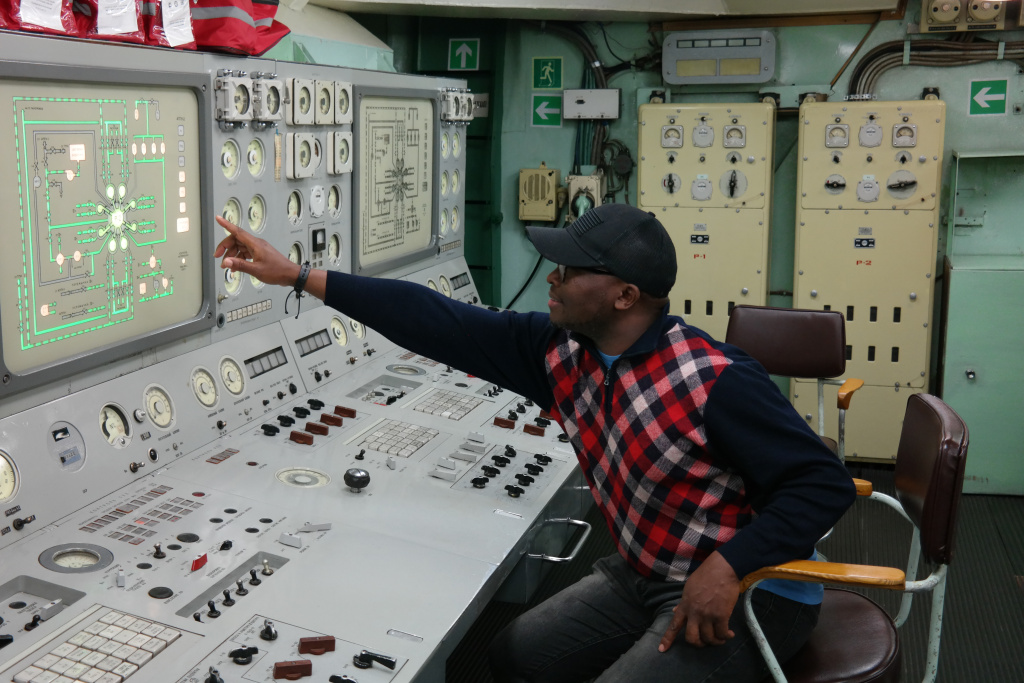
«The programme was intensive and strongly practice-oriented. It helped me gain a deeper understanding of Russia’s experience in the development and operation of SMRs. For Indonesia, as an archipelagic country, floating nuclear power is of particular interest, and I am confident that the knowledge gained during the School will contribute to the further development of floating nuclear power unit projects in Indonesia», - said one of the participant from Indonesia Banyu Rizki Fauzan, National Research and Innovation Agency.
For reference:
Rosatom Technical Academy is an international multidisciplinary centre for nuclear industry personnel training. Since 2019, Academy has been an IAEA Collaborating Centre. In October 2024, Academy extended its agreement with the IAEA and became the first and only Collaborating Centre to cooperate with the Agency across five programmatic areas. Over the course of this cooperation, more than 80 international events have been held, bringing together more than 2,100 participants from different countries.
The world is currently showing growing interest in small modular reactor technologies. State Atomic Energy Corporation Rosatom is the only vendor in recent years to bring them into practical use. Six years ago a unique floating nuclear power plant was commissioned, serial production of innovative RITM-200 small modular reactor units with a capacity of 55 MW is underway and the world’s first export contract for the construction of an SMR was signed with Uzbekistan.