
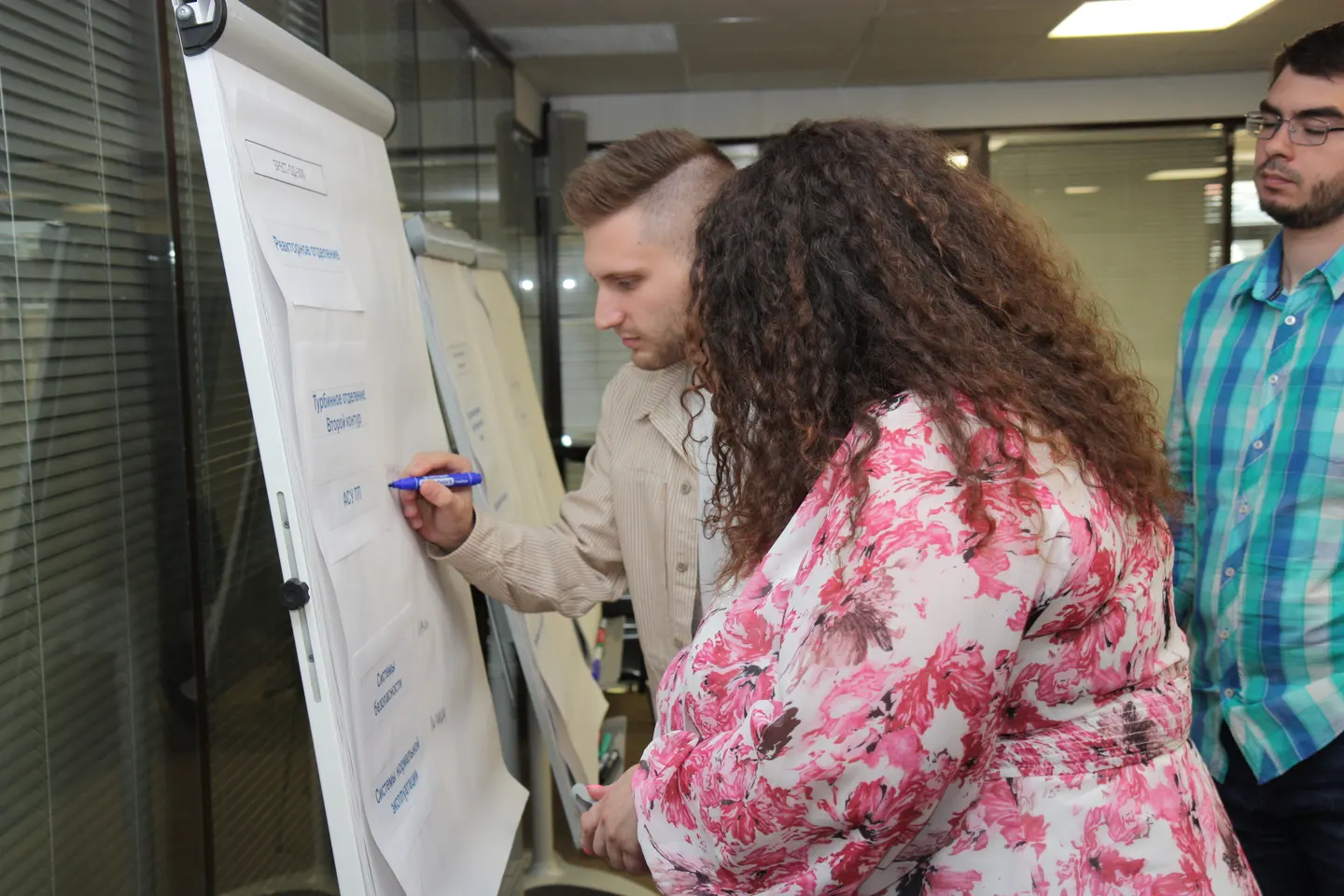
The Moscow branch of the Rosatom Technical Academy (RosatomTech) held a-kick-off meeting on the training the young professionals to support the export potential of the technologies developed in the framework of the “Proryv” Project. Translation of the Russian word ”Proryv” means “breakthrough” and reflects the strategical trajectory of nuclear development in Russia towards a multicomponent nuclear energy system with a portion of advanced fast reactors to close nuclear fuel cycle of both thermal and fast power reactors that finally will turn to the one dominated by advanced fast reactors.
This strategy comes from the initiative of the President of Russian Federation put forward at the UN Millennium summit that offers a proliferation-free fuel cycle accomplished with transmutation of radio wastes as a global option for nuclear development. This initiative started an International Project on Innovative Nuclear Reactors and Fuel Cycles (INPRO) in the IAEA in early 2000s and recently approaches the stage of industrialization in Russian Federation with the pouring the first concrete in the foundation of reactor building for the lead-cooled fast reactor BREST-300.

The meeting was attended by Head of the Proryv Project, Special Representative of ROSATOM for International and Scientific Projects Mr Vyacheslav Pershukov, Advisor to the Director General of ROSATOM Mr Vladimir Artisyuk, Senior expert on nuclear engineering of the IAEA Mr Alexander Bychkov (ex-Director of the IAEA Dpt of Nuclear Energy), Project Director of the RosatomTech Centre for S&T Expertise Mr Anton Dyachenko who is the team leader in organizing training of the operating staff for demonstration complex in Seversk based on lead cooled fast reactor BREST.
In the keynote speech Mr Vyacheslav Pershukov emphasized that the new technological platform of nuclear power developed in the Proryv Project is a guarantee of the growth of the global electricity generation market in the XXI century. To secure this growth it is a matter of urgent need to transfer the ideas and objectives of the Poryv Project to potential collaborators beyond Russia. In his presentation Mr Vladimir Artisyuk made a focus on the fact that closing the nuclear fuel cycle on the site of a particular NPP – which is a backbone of the BREST-based demonstration complex will give a chance for newcomer countries to deploy nuclear technology which is free from proliferation concern, practically unlimited in terms of resources and environmentally friendly since it is based on the concept of radiological equivalence. Mr Alexander Bychkov informed the participants about the structure of the IAEA as a whole and the INPRO project in. Special attention in his presentation was given to a newly lunched project “Step Forward” that initiated international studies of the nuclear energy systems with nuclear wastes transmuters included. INPRO is the IAEA born project and platform that has objectives similar to that in Proryv Project.
Among the main objectives of the event was development of the roadmap to build-up the competences in the Proryv Project to enforce its move to internationalization. This includes a series of international webinars in certain areas as well as the development training materials for special training courses to be delivered on the side of Proryv Project for international teams. This training courses would be focused on the technology of Mixed nitride uranium-plutonium (MNUP) fuel fabrication that would be started on industrial scale 2024 at Fabrication/refabricating module and also be focused on technological and operational aspects of lead cooled fast reactor BREST-OD-300. The training materials would be developed using the systematic approach to training (SAT) methodology to meet the best IAEA practices in the field of personnel training and available in Russian and English language to familiarize foreign partners with advanced ROSATOM technologies. Mr Anton Dyachenko the member of the IAEA Human Resource Development Working Group in his report introduced this methodology to young experts of Proryv Project and presented the enabling and terminal objectives of this activity.

For references:
The Proryv Project implemented by the State Atomic Energy Corporation ROSATOM is aimed at achieving a new quality of nuclear energy, development, creation and industrial implementation of closed nuclear fuel cycle (CNFC) based on fast reactors that will lead to development of a large-scale nuclear power industry.
The purpose of activities under the Proryv Project is the creation of nuclear-energy complexes that include NPP, spent nuclear fuel reprocessing plant and fuel re-fabrication plant, preparation of all types of radioactive waste to the final disposal into geological formations for development of large-scale nuclear power.
The heart of the Poryv Project is lead-fast reactors working in an on-site-closed fuel cycle and on condition of radiological equivalence (the risk from nuclear wastes destined to geological storage is equal to that of natural uranium excavated to produce fuel). This approach excludes the enrichment technology thus increasing the barriers for proliferation. In June 2021 the first concrete was poured in the foundation of the reactor building of demonstration lead-cooled fast reactor BREST-300 that is going to start operation in 2026.